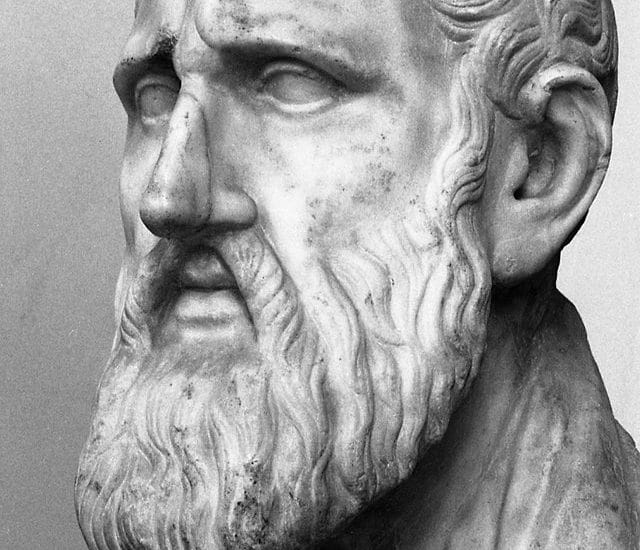
Zeno
Zeno of Citium was a philosopher whose thoughts carved out the landscape of Stoicism, a school of thought that has persisted through centuries. Emerging in the Hellenistic era around 300 BC, Zeno’s philosophy emphasized virtue, reason, and living in harmony with nature. Today, we delve into his life, teachings, and lasting impact, shedding light on how his principles remain relevant in navigating modern life’s complexities.
Early Life and Background

Zeno was born circa 334 BC in Citium, a city on the eastern side of Cyprus. His upbringing was deeply intertwined with the marketplace, where his father, Mnaseas, was a merchant. The origins of Zeno’s ancestry have sparked debates among historians. Many believe he might have roots in Phoenician or Greek heritage, due to the diverse population of Citium. However, one certainty remains: Zeno was well-versed in Greek, the language in which he communicated his philosophical ideas.
In his early years, Zeno ventured into commerce. As fate would have it, a shipwreck led him to Athens, marking a turning point in his life. This is where Zeno’s passion for philosophy ignited. Upon salvaging a shipwreck, he found himself drawn to a bookseller, captivated by Xenophon’s “Memorabilia” of Socrates. This encounter reshaped his destiny, leading him to seek wisdom.
The Influences of Philosophy
Zeno’s philosophical journey took a significant turn when he encountered Crates of Thebes, a prominent Cynic philosopher. The Cynics believed in living a life of virtue in accordance with nature, spurning societal norms. This ideology greatly influenced Zeno. Despite embracing the elements of Cynicism, Zeno retained a unique balance of self-discipline and social decorum.
His time studying under various philosophers enriched his understanding. He was influenced by the Megarians, specifically Stilpo, and he absorbed teachings from the Platonic tradition. These teachings shaped Zeno’s views on logic, ethics, and the nature of the universe.
The Birth of Stoicism
Around 301 BC, Zeno began teaching in Athens at the Stoa Poikile, a painted porch in the Agora. His followers, initially dubbed “Zenonians,” eventually adopted the title of “Stoics,” named after their school’s location. Zeno’s teachings resonated widely, as they offered practical guidance on attaining a virtuous life.
Zeno’s philosophy diverged from the Cynics by positing that certain external things could hold value, especially if they aided self-preservation. He argued that true happiness lies in virtue and that moral actions should be the focus of one’s life. In this sense, Zeno laid the groundwork that Stoicism would build upon in later centuries.
Key Philosophical Concepts
Logic: The Foundation of Reason
Zeno emphasized the importance of logic in philosophy. He stressed that wise individuals must discern truth from deception, shaping the foundation for Stoic reasoning. Zeno’s concept of assent (sinkatathesis) illustrates how we acquire knowledge. He proposed that understanding occurs in stages, akin to the gradual clenching of a hand.
- Perception: The extended open hand symbolizes how we perceive the world.
- Assent: Slightly closing the hand represents the cognitive acknowledgment of those perceptions.
- Comprehension: A fully closed fist signifies a true understanding of knowledge.
- Knowledge: The ultimate state is when one truly grasps a concept, which he called katalepsis.
These stages laid the groundwork for later Stoics like Chrysippus to refine and expand these ideas.
Physics: The Divine Universe
Zeno believed that the universe possesses divine reasoning and operates as a cohesive whole. He integrated the teachings of Heraclitus into his view of physics, positing that a divine “artisan-fire” flows through the cosmos. This divine essence, or aether, underlies all existence, fostering creativity and order.
In Zeno’s eyes, nature was an artist working through this divine fire. He viewed all of existence as interconnected, where every part belongs to the whole. He embraced the idea of fate, believing that true happiness arises from obeying natural laws.
Ethics: Virtue as the Highest Good
Ethically, Zeno established that virtue is the sole good, a perspective that set Stoicism apart from prior philosophies. He defined happiness as a “good flow of life,” achievable through right reasoning intertwined with the universal reason, or Logos. Zeno asserted that negative emotions, like desire and fear, disrupt our peace of mind and must be regulated through reason to live virtuously.
Zeno’s ethical framework highlights the concept of “fitting actions” (kathêkon), where certain actions hold relative value based on their contribution to self-preservation without overshadowing virtue. He emphasized that no moral action is inherently superior, creating a foundation for equality in moral character.
Zeno’s Methodology and Teachings

A noteworthy characteristic of Zeno was his teaching demeanor. He manifested a serious, humble presence paired with a sharp intellect. His teachings often included clever anecdotes, aimed at demonstrating philosophical principles in relatable contexts.
Zeno’s life served as a model for his teachings. Despite his wealth, he embraced a frugal lifestyle influenced by Cynicism. His occasional reluctance to conform to societal standards showcased the balance between virtue and pragmatic living. For instance, during an embarrassing moment carrying lentil soup, he displayed an acute awareness of societal norms, fostering both self-reflection and humility.
Legacy and Influence
Zeno’s influence extended far beyond his time. His core ideas were preserved and elaborated upon by later Stoics like Chrysippus. The Stoic school flourished during the Roman era, influencing intellectual thought across generations.
The Renaissance saw a revival of Stoicism as thinkers sought to integrate Zeno’s concepts into their philosophies. Today, Modern Stoicism embraces Zeno’s teachings, guiding individuals in a chaotic world. Stoicism’s resolve to promote resilience, virtue, and self-control remains relevant in today’s society.
Conclusion: Embracing Zeno’s Wisdom
Zeno of Citium has indelibly shaped philosophical thought. His teachings remind us that virtue, reason, and harmony with nature are paramount to achieving a fulfilled life. As we look toward the future, it becomes evident that Zeno’s legacy endures, offering powerful insights into enduring human challenges.
By adopting a Stoic mindset, we can cultivate resilience and tranquility in our own lives. Zeno’s journey, teachings, and enduring wisdom call upon us to confront life’s chaos with courage, ultimately leading us toward wisdom and inner peace.